Wednesday, February 12, 2020

Widespread/Fibromyalgia Pain Treatment In Delhi


Fibromyalgia is one of the common causes of long-term widespread body pain. Pain may be accompanied by other symptoms including
  • Fatigue
  • Nonrefreshing sleep
  • Impaired concentration
  • Memory issues
  • Mood disturbances
  • Increased sensitivity
  • Numbness and tingling in hands and feet

Management

A pain clinic is an ideal place to manage fibromyalgia as it brings together the skills of a wide range of specialists working together as a team. This multi-disciplinary approach is essential to minimize the impact on the quality of life. A combination of drug and non-drug treatments can help manage the symptoms. I offer personalized pain management plans on lines of Pain Management Programme (PMP). I can help you
  • Understand the condition
  • By making a management plan and prescribing medications. When considering medications I take into account the latest evidence and individualize it keeping in mind your symptoms and other medical problems. The resulting pain reduction can enable active participation in physical therapies and rehabilitation.
  • Implement necessary lifestyle modifications
  • By involving other experts and coordinating your care with help from other specialists including
  • Physiotherapist– they will advise you on posture, physical function, the pacing of activities. There is good evidence supporting aerobic exercises and graded exercise program in fibromyalgia management
  • Psychologists- Cognitive behavioral therapy has been shown to improve function and decreased pain severity in fibromyalgia. Psychologists can help in reducing the impact of depression/ anxiety and in stress management by teaching relaxation, coping strategies
  • Occupational therapist
  • Nutritional specialistdietary profiling and nutritional advice helping you eat a balanced diet and keep a healthy weight.
  • Complementary and alternative therapies including Acupuncture, TENS, meditation, Ayurveda, and wellness

Monday, February 10, 2020

Cancer Pain Treatment In Delhi

Pain in cancer may arise due to many reasons and is often the presenting complaint leading to the diagnosis of cancer. It may be
  • Related to cancer itself or its spread to other body parts
  • A late presentation due to side effect of treatments such as chemotherapy, radiotherapy, and surgery
  • A result of extra stress placed on other body parts for example shoulder pain due to using of a stick for walking
  • A totally unrelated coincidental problem such as arthritis
Cancer Pain Treatment In Delhi, Cancer Pain Management In Delhi, Gurgaon
Pain can be differentiated into background pain (which is always present in the background and is managed with regular medications) and breakthrough pain (pain which breaks through your regular pain relief). Breakthrough pain may occur unprovoked or may be triggered by external or internal factors. In cancer patients, different types of pain may coexist. It is not just limited to pain arising from inflammation and tissue damage for example cancer of pancreas spreading to neighboring organs and nerves leading to visceral and neuropathic pain respectively and a distant spread to bones producing bone pain. Different types of pain present differently for example
  • Neuropathic/ Nerve pain is generally described as burning, shooting, electric shock-like or stabbing pain with associated tingling or numbness. It may be a consequence of cancer itself or a result of treatments such as chemotherapy (chemotherapy-induced peripheral neuropathy- CIPN).
  • Visceral Pain originates from viscera (organs in the body cavity) and is generally described as deep aching, squeezing and cramping sensation
  • Bone pain presents as an aching, throbbing sensation. Some cancers have a preference to spread to bones

Pain Management

Pain relief needs to be tailored to the cause, severity, and duration of pain. In most cases, reasonable control can be achieved by using a combination of methods. Multimodal, Multidisciplinary approach provides the opportunity to maximize pain relief and provide support not only for the physical needs but also for the emotional, spiritual and social needs.  
Some of the management options available via a pain clinic are

Medications management

This involves using different classes of medications to optimize pain control. Using a combination of drugs helps to minimize side effects and maximize the benefits. Whilst considering the drug therapy many factors need to be considered like the type of pain, cause and severity of pain, other medical problems and medications being used, medications tried previously, pre-existing nausea/vomiting, constipation, ability to take and absorb medications, liver and kidney function, etc. Apart from the standard medications mentioned in other sections some other medications are used more often in cancer pain such as steroids, bisphosphonates (for bone pain).

Nerve blocks, Radiofrequency & Neurolytic procedures

Nerves are commonly targeted in pain-relieving interventions, for example, pudendal nerve for perineal or rectal pain, suprascapular nerve for shoulder pain, intercostal nerves for chest wall pain, etc. The pain impulses being transmitted via the nerves can be temporarily blocked using local anesthetics. The transmission of impulses can be reduced for longer duration using Neurolytic procedures, which involve the injection of alcohol or phenol instead of local anesthetic. Examples of neurolytic procedures include
  • Coeliac plexus, splanchnic nerves neurolysis
  • Hypogastric plexus neurolysis
  • Lumbar sympathetic neurolysis

Radiofrequency procedures e.g.

suprascapular nerve pulsed radiofrequency for shoulder pain involves exposure to high-frequency electrical current in the RF range (≈ 500 kHz). This exposure can be continuously generating high temperatures or pulsed where the temperature is kept below 42 °CPulsed RF can be used to target most nerves including those with motor components. The resulting neural modification effect’s the transmission of pain impulses producing pain relief.

Spinal procedures e.g. epidural, intrathecal pumps

Certain procedures such as pumps to deliver medicines directly in the spine (intrathecal pumps) are performed more often for cancer pain.

Drug infusions

Psychology

Cancer is often accompanied by anxiety, depression, and fear of the worst. A psychologist can help in analyzing these thoughts rationally and developing a positive approach. They can help by teaching relaxation techniques, coping strategies and by reducing the effect of mood on pain.

Physiotherapy

Complementary and alternative therapies including AcupunctureTENSmeditation, Ayurveda and wellness. For more information on how these can be helpful please follow the respective links

Wednesday, February 5, 2020

MOTHER’S THUMB INFORMATION LEAFLET….… Helping you look after the little ones…..

What is De Quervain’s Tenosynovitis?

Tendons are like ropes that connect muscles to bones and are enclosed within a sheath (covering) that allows smooth movement. De Quervain’s Tenosynovitis is caused by painful irritation of the sheath of two tendons as they travel from the wrist towards the thumb. These tendons travel in close proximity to each other and are involved in thumb movements (such as bringing the thumb away from the hand as it lies flat in the plane of the palm). When their sheath becomes thickened or irritated, the tendons have less space for movement resulting in pain and other symptoms. Some experts attribute the degeneration of tendon and deposition of fibrous tissue as the cause for the condition.

What are the symptoms of De Quervain’s Tenosynovitis?

De Quervain’s tenosynovitis presents with
  • Pain and swelling at the base of thumb, wrist
  • Pain during thumb movements such as griping or pinching
  • Sometimes a snapping/ sticking sensation may be felt  with thumb movement 
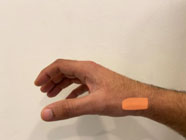
Area of pain  in De Quervain's Tenosynovitis
Image 1: Area of pain in De Quervain’s Tenosynovitis

What causes De Quervain’s Tenosynovitis?

This condition occurs most often between the ages of 30 -50 years. Quite often the cause is unknown although tendon sprain and overuse during repetitive movements can predispose to the development of this condition. Some of the risk factors include:
  • Women, especially mothers with young infants are more likely to be affected due to a combination of overuse, hormonal changes and fluid retention. Improper lifting technique can specially predispose to the development of this condition and it is also addressed as Mothers Thumb.
  • Professions or hobbies involving repetitive wrist or hand motions such as with musicians, dental hygienists, golfers, mountain bikers, typists, video game players. Other commonly used names used for the same condition include texting thumb, gamers’ thumb, washerwoman’s sprain and designer’s thumb.

How is De Quervain’s Tenosynovitis diagnosed?

A simple test used for diagnosis involves making a fist around the thumb placed in the palm on the affected side (Image 2). The patient is then asked to bend the wrist towards the little finger as shown in the image 3. If this makes your pain worse, then the test is considered positive
De Quervain's Tenosynovitis diagnosed
Image 2
De Quervain's Tenosynovitis diagnosed
Image 3
An ultrasound scan may help identify thickening of the tendons, increased fluid surrounding the tendons, increased blood flow, narrowing of the canal/ passage for tendons, anomalies in tendon slips and thus help confirm the diagnosis. MRI is useful for detecting mild disease where ultrasound in inconclusive. An x-ray of the wrist is sometimes requested to rule out other conditions with similar presentation.

How is De Quervain’s Tenosynovitis managed

The treatment option will vary depending on multiple factors such as the duration of symptoms, severity & impact on your daily activities, previous treatments and their results. It can be self-limited and may resolve without intervention. For most individuals non surgical treatment options suffice with very few requiring surgery. Treatment options include-
Rest. This includes avoidance of provoking activities and heavy work with the affected hand for several weeks. Rest provides an opportunity for the symptoms to settle. In mothers with young infants, changing the lifting technique and breast feeding position can make a difference.
Icing – Ice can help in reducing the pain and swelling.  Avoid applying the ice directly to the skin. Ice can be wrapped in a towel and used for a few minutes (as tolerated), a few times in a day.
Splinting – The splint may be required to be worn for a few weeks. It works by restricting the movement of thumb thereby providing an opportunity for healing to occur. The combined use of splints and steroid injections has been found to be more effective than splinting alone.
Medications – Pain killers can provide temporary relief and may include anti-inflammatory medications. It is important to use these medications as directed by your doctor.
Physiotherapy– This involves a combination of stretching and strengthening exercises to improve the hand function. Exercises are best learned under supervision of an experienced therapist. Once you have learned the correct technique, you can continue with these at home. Exercises have been shown to improve the duration of pain relief when used in combination with steroid injection and splinting.
Steroid injections In case the pain does not settle, then your doctor may consider injectionsSteroids are effective anti-inflammatory medicines and are commonly used treatment modality with near complete relief with one or two injections.
Sometimes septae (partitions) may be present in the intended injection compartment. Using ultrasound can help not only in verifying the diagnosis but also in visualizing these septae and accurately guiding the injection into the tendon compartments. There are studies highlighting the role of ultrasound in increasing injection accuracy and citing success rates of 91% after up to two injections.
Surgery– if the problem persists despite the above treatments then surgery can be considered.

Monday, February 3, 2020

Chronic Post Surgical Pain Treatment In Delhi

Chronic post surgical pain (CPSP) is pain localized to the surgical site or a referred area persisting 3 months after surgery. To diagnose CPSP pain should have been absent before surgery or should have different characteristics from preoperative pain. Other possible causes of the pain such as infection, recurrence of original problem etc need to be excluded.
CPSP is a common complication of surgery and rates up to 80 % in adults have been reported in some studies. CPSP is also reported in children although the incidence is less than in adults. It can have significant consequences for the individual and the World Health Organisation plans to include this as a separate diagnosis in the upcoming version of the International Classification of Diseases, ICD-11. Type of surgery influences not only the risk of development but also the severity of CPSP. Some surgeries are more prone to develop CPSP such as amputations, thoracotomy, and mastectomy. It is observed after commonly performed operations such as hernia repair, caesarean sections, knee replacement etc. Risk factors for developing CPSP include having pain before surgery, severity of acute pain immediately after surgery, multiple surgeries younger age and site of surgery. Genetic and psychological factors are also thought to play a role. A significant proportion of the cases are attributed to nerve damage.
Management of CPSP required multi-modal approach focussing on
  • Patient and family education
  • Optimization of medications
  • Interventional approaches such as injections and neuromodulation.
  • Physiotherapy
  • Psychological interventions such as cognitive behavioural therapy

Saturday, February 1, 2020

Complex Regional Pain Syndrome Treatment In Delhi

Complex Regional Pain Syndrome is one of the causes of persistent limb pain. It can occur after surgery or injury and sometimes the injury is so trivial that you may not even remember it. In other cases, the injury may be more severe with or without nerve damage. The pain, however, lasts much longer and is more severe than expected. It can range from mild self-limiting to chronic debilitating conditions affecting activities of daily living and quality of life. The reason why CRPS develops is unclear and multiple mechanisms are thought to be involved. A combination of signs and symptoms is used to make the diagnosis as there is no specific diagnostic test. Investigations are helpful to exclude other conditions such as infection and rheumatologic conditions which may have a similar presentation.
 
Pain in CRPS is accompanied by other signs and symptoms such as
  • Hypersensitivity of the affected limb
  • Swelling, abnormal sweating
  • An involved limb may feel unusually cold or warm with or without color changes
  • Nail, skin and hair changes
  • Stiffness, weakness, abnormal tone of muscles and jerky movements

Management

The aim of CRPS management is pain control and functional recovery. Early diagnosis and treatment using a multidisciplinary approach is preferred. Your pain management specialist may recommend interventions such as intravenous drug infusions, sympathetic blocks such as stellate ganglion block or lumbar sympathetic blocks and neuromodulation. These are used in combination with medications, physiotherapy and psychology input.  
Medications prescribed depend on the phase of the disease and the predominant symptoms. A combination of anti-inflammatory drugs, neuropathic medications and opioids are commonly utilized. Some other medications including bisphosphonates, free radical scavengers (topical 50% dimethylsulfoxide- DMSO), oral steroids, etc. may also be used.
Your physiotherapist will teach you desensitization techniques if the limb sensitivity is increased. It helps in preventing problems due to weakening and reduced usage of the affected limb. Strengthening exercises are incorporated as the pain is adequately controlled. He may consider specialist interventions such as mirror therapy or graded motor imagery if indicated.